金粉世家
书名:逆水寒|作者:笑无语|本书类别:古言|更新时间:00:00:00|字数:3896字
一 | Ahaan Panday and Aneet Padda have delivered one of the biggest blockbusters of this year, Saiyaara. The duo not only impressed the audience with their onscreen chemistry, but they also continue to remain good friends even off camera. Ahead of the film's World Television Premiere, the actors have opened up about their bond and why it felt so natural. Ahaan said that there was no formula involved in creating the chemistry, and it was not engineered at all. He feels that when co-stars get along well, everything else happens naturally. Ahaan said that there was no formula involved in creating the chemistry, and it was not engineered at all. He feels that when co-stars get along well, everything else happens naturally. "I think when two people genuinely become great friends, you don’t have to plan the chemistry on screen...Whatever happens, happens naturally and effortlessly," Ahaan told LiveMint. Aneet also opened up about her bond with Ahaan and said, "When I met Ahaan for the first time, I knew that I was going to be very comfortable with this person…There was something very disarming about him." The actress shared that the first time she met director Mohit Suri and Ahaan together, she was nervous and was 'messing up a bit'. She revealed that she was cracking jokes that weren't laughing but Ahaan was still laughing. "He played the guitar, we sang songs, chatted a lot in the car when he came to drop me home, and that’s when I thought he was a fantastic presence to be around. I really liked him and his energy," Aneet told LiveMint.She continued, "We became very good friends in the months before the shoot, met a lot, shared our doubts and fears." Aneet also revealed that she and Ahaan had each other's backs during the filming, and it made her feel safe and comfortable on set. Saiyaara earned over Rs 500 crore worldwide. It is now streaming on Netflix.Also Read: Ahaan Panday and Aneet Padda Lead IMDb’s Most Popular Indian Stars of 2025 List。

二 |
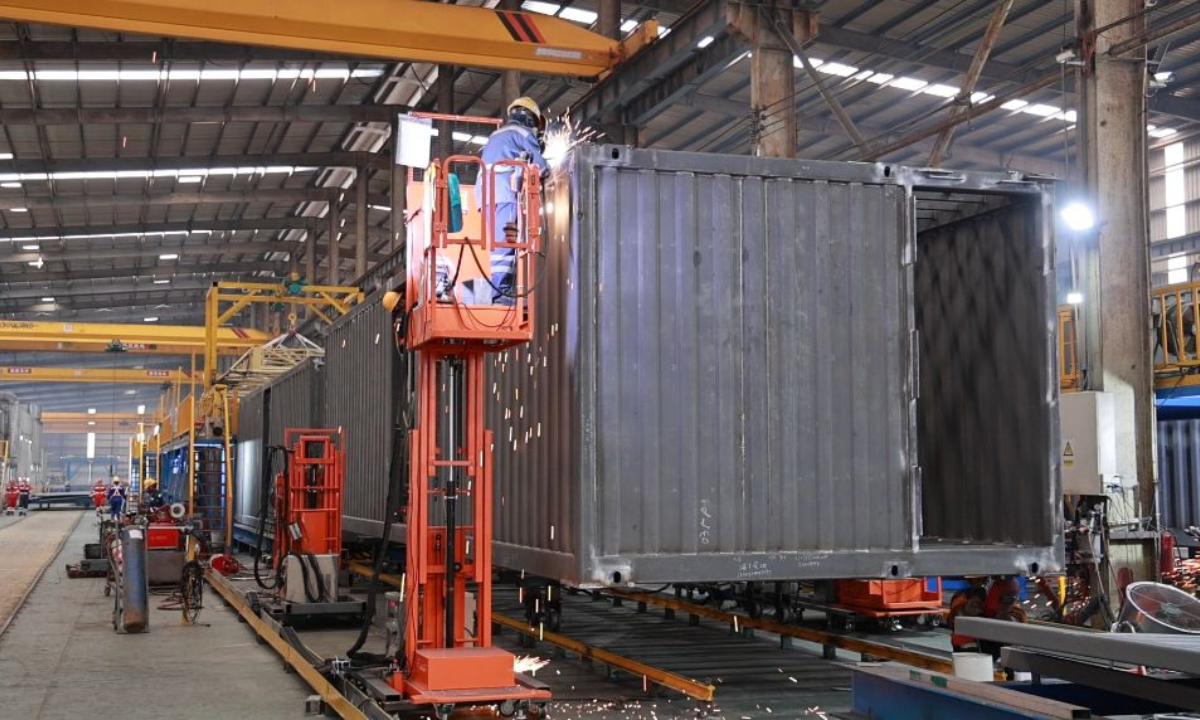
A 19-story hotel in Brisbane was not a conventional construction project in Australia, much of it having already been built thousands of kilometers away, inside a factory in south China.
Its room modules arrived with walls, pipes, wiring and interior fittings largely completed, allowing the building to be assembled at a pace of roughly one floor every four to five days.
The project was delivered by Foshan Meizong Buildings Technology Co., Ltd., a firm based in the city of Foshan in Guangdong Province. It reflects a broader shift in the industry, with more work that once had to be done at a construction site now being completed on a factory floor.
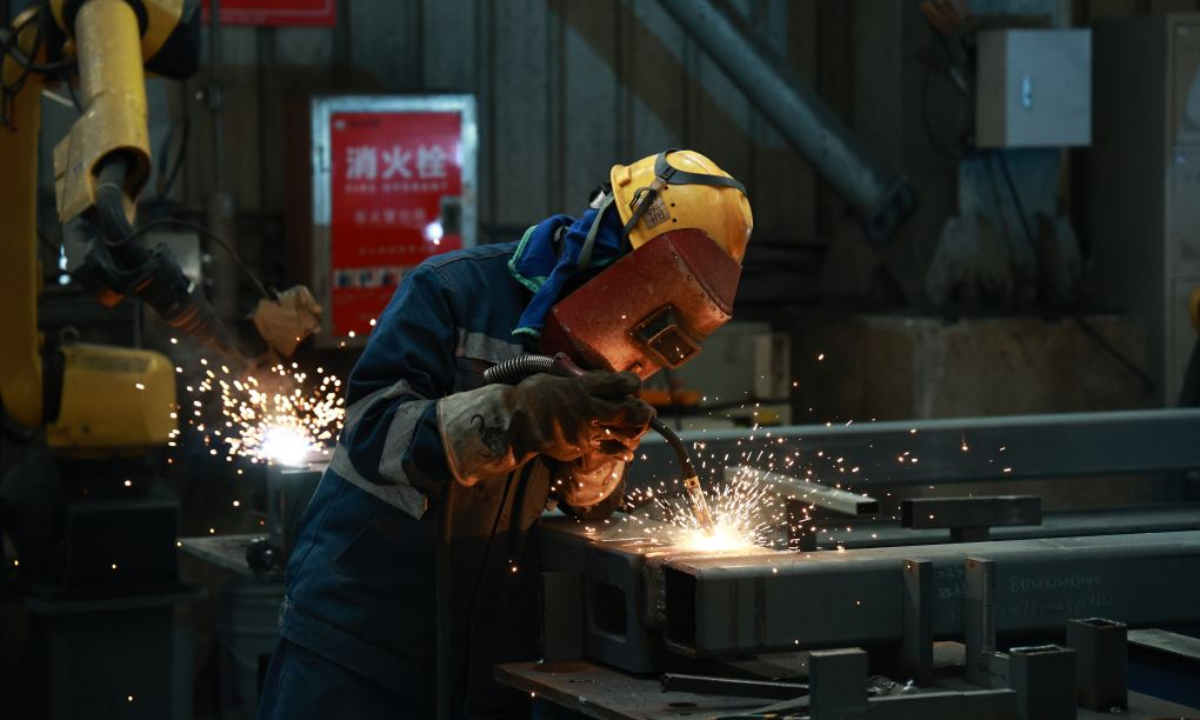
Inside Meizong's workshop, automated cutters slice steel tubes to precise dimensions as workers weld structural joints. Assembly teams install wall panels and lay utility lines. In the finished-goods area, dozens of units stand ready for shipment, with kitchens, bathrooms, lighting and sockets already fitted.
More than 90 percent of the work can be completed in the factory, while delivery takes only about one-third of time needed for conventional construction, according to Pang Mingyuan, the company's general manager.
"Building a new home is like building with blocks," Pang said.
Modular housing is gaining acceptance in markets such as Australia and New Zealand, where conventional construction faces high labor costs, lengthy building cycles and weather-related disruptions, while housing remains scarce in some remote areas, Pang adds.
Foshan alone is home to more than 300 exporters of prefabricated buildings. Across the industry, modular structures are being used for hotels, dormitories and offices, while some manufacturers are branching into customized outdoor spaces.
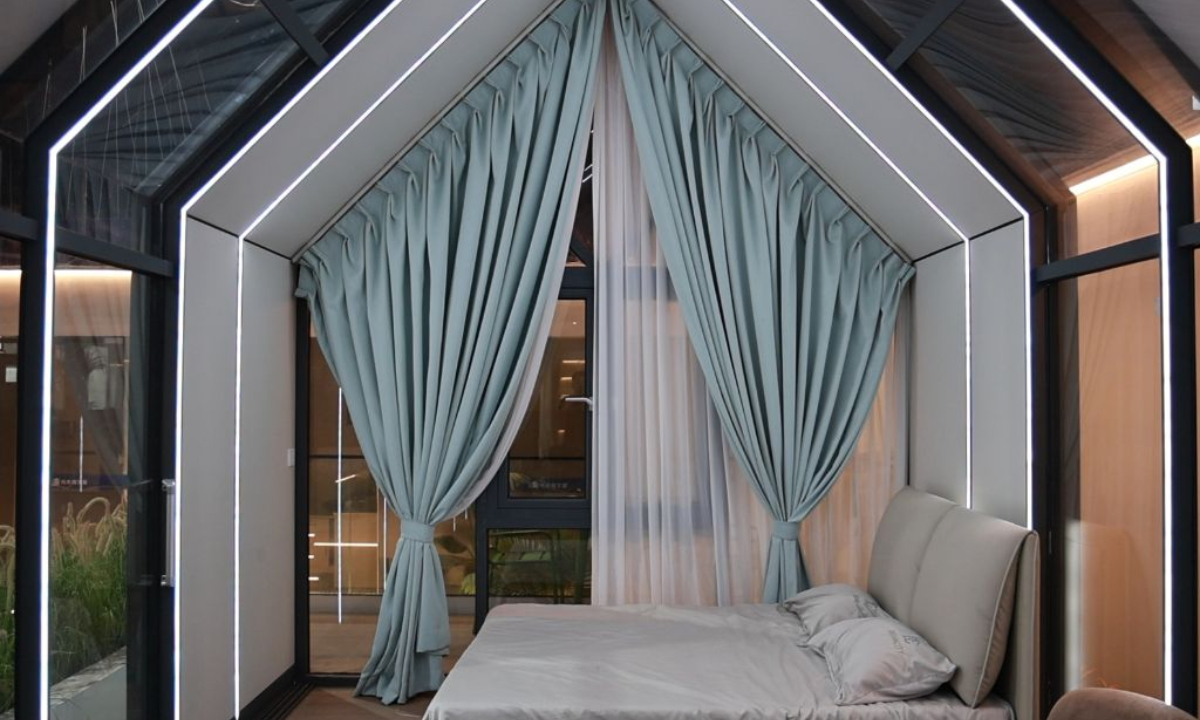
At SunnyJoy Intelligent Technology Co., Ltd., the glass roof of a modular outdoor room slides open under electric power. Made up of 13 modules, the structure attracted attention at this year's 139th Canton Fair.
"Three adults can assemble it in two and a half hours by following an installation video," said Zhang Yong, the company's general manager.
The company's products sell well in North America and Oceania, while emerging markets in Africa and Southeast Asia are also growing rapidly. Social media has become an important source of overseas customers: SunnyJoy has built a following of around 10 million across domestic and overseas platforms, with online channels generating more than half of its customer inquiries.
Behind such products is the Pearl River Delta's manufacturing network. Zhang said a single outdoor structure can involve dozens of suppliers, with everything from frames and worktops to drive systems and lighting sourced within the region.
That proximity allows manufacturers to adjust designs, upgrade components and respond quickly to changing customer requests. As products become more integrated, companies are also expanding into higher-value offerings that incorporate solar glass, energy storage and intelligent control systems.
At a modular factory of China Construction Science & Technology Group Co., Ltd. in the Shenshan Special Cooperation Zone, laser cutting, automated welding and intelligent assembly work in coordination. A digital management system links design, procurement and production, generating material lists and processing drawings from design plans.
Its standardized production system can turn out a wall in 12 minutes and a room module in two hours. The facility has an annual capacity of up to 30,000 units and can produce different types of building modules in parallel according to project needs.
The expansion taking place on factory floors is also showing up in export figures. In the first half of this year, exports of prefabricated structures from seven cities under Guangzhou Customs reached 1.94 billion yuan (285.7 million U.S. dollars), up 21.2 percent year on year, with products reaching more than 190 countries and regions.
One modular-building producer said its export orders have risen nearly 60 percent year on year so far this year, with production scheduled several months ahead.
Manufacturers are also expanding their localized services overseas. SunnyJoy said it is working with third-party warehouses in markets including the United States and Australia to speed up deliveries.
For Chinese producers, the opportunity goes beyond shortening construction time. Their expansion overseas points to a broader shift: buildings are increasingly being designed, produced and exported more like manufactured goods.
。


